Adolescent Idiopathic Scoliosis (AIS)
Reviewed by our Healthcare Team Member

Marc Lamantia, DC
Share This Page
What is Adolescent Idiopathic Scoliosis?
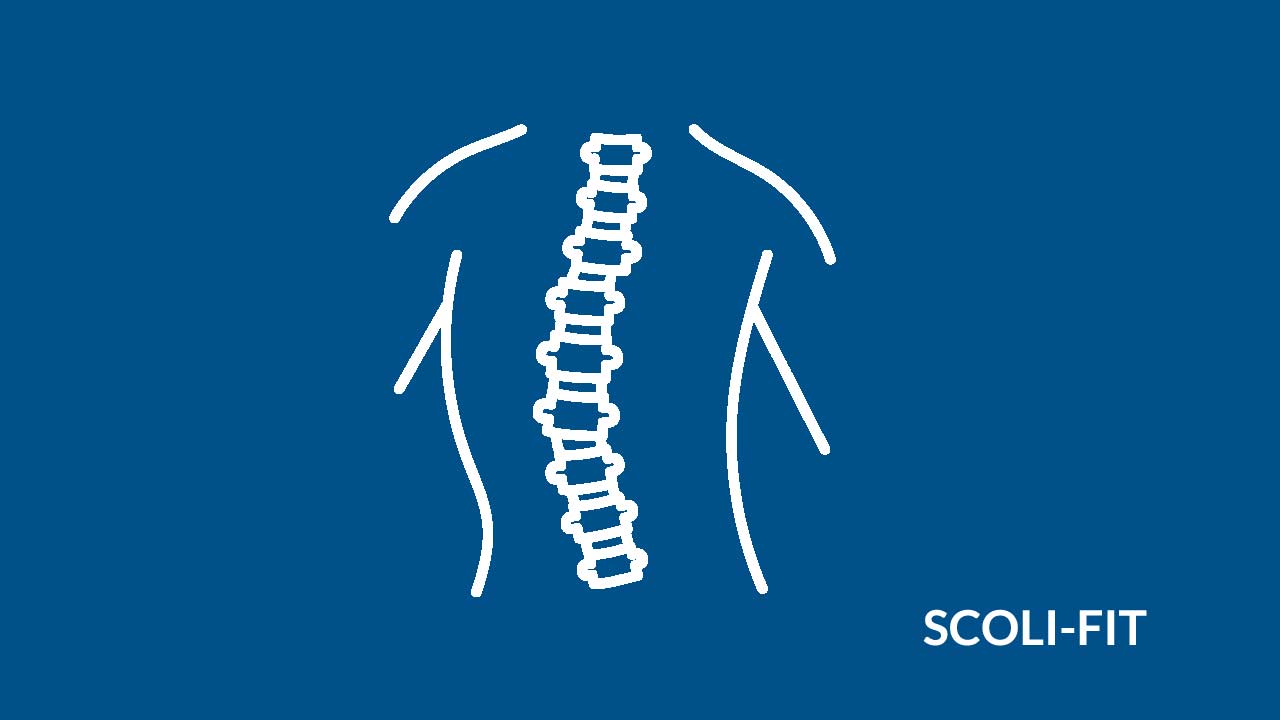
Adolescent Idiopathic Scoliosis (AIS) is a condition in which the spine develops an abnormal sideways curve during adolescence — typically between ages 10 and 18 — without an identifiable cause. The term “idiopathic” means that the exact reason for the curvature is unknown, even though genetics and other biological factors are believed to play a role.
AIS is the most common form of scoliosis, accounting for the majority of idiopathic spinal curvatures seen in this age group. Mild forms may be found in about 2–3% of adolescents.
How is AIS recognized?
Spinal curves in AIS may be noticed by a parent, clinician, or during a school screening. Common physical signs include:
- Uneven shoulders or waist
- One shoulder blade that appears more prominent
- Leaning slightly to one side
- One hip higher than the other
Often, the first screening involves a clinician watching the child bend forward to see if the ribs or muscles on one side are more prominent — a test often called the Adam’s forward bend test.
How is AIS diagnosed?
A diagnosis of AIS is confirmed with standing spinal imaging, most commonly X-rays, which allow measurement of the curve using the Cobb angle. A curvature greater than 10 degrees with vertebral rotation is typically considered scoliosis.
Additional imaging or evaluation may be used in select cases to ensure that the curvature is idiopathic (not due to another condition).
What causes AIS?
The exact cause of AIS is not known. Research suggests that multiple factors may contribute, including:
- Genetic influences — a family history of scoliosis may increase risk.
- Growth patterns — curves often develop or worsen during rapid growth spurts.
- Biologic and hormonal factors — some studies suggest hormonal or metabolic influences may be involved.
Because AIS is idiopathic, it is diagnosed after other causes — such as congenital spinal anomalies or neuromuscular conditions — have been excluded.
Does AIS cause pain?
Mild forms of AIS often do not cause pain or functional limitations. Many adolescents and parents first notice the condition due to physical asymmetry rather than pain.
In some cases, particularly when curves are larger or there are muscular imbalances, mild discomfort may be present. Pain management is individualized and often conservative.
How is AIS monitored and treated?
Treatment depends on several factors, including:
- Age and growth potential
- Curve magnitude
- Curve pattern
- Risk of progression
Observation
For small curves, routine monitoring — including physical exams and periodic imaging — may be all that’s needed, especially if skeletal growth is nearing completion.
Bracing
If an adolescent is still growing and the curve is moderate in size, a brace may be used to help prevent the curve from worsening. Bracing does not always permanently correct the curve but can help manage progression during growth.
Physical Therapy
Specific exercise programs, such as scoliosis-specific therapy (e.g., the Schroth Method), may support postural awareness and muscular balance alongside monitoring.
Surgery
In more severe cases — or when curves progress despite bracing and the individual is still growing — surgical options such as spinal fusion may be considered to correct the curvature and limit further progression.
What is the long-term outlook?
Most adolescents with AIS live active, healthy lives. Many curves remain mild and do not require invasive intervention. The goal of care is to monitor growth, intervene when appropriate to prevent progression, and optimize function and comfort. Early detection and personalized monitoring help clinicians make thoughtful decisions based on the individual’s growth and curve behavior over time.
How your care team may approach AIS
Care for AIS often involves a multidisciplinary approach that may include:
- Regular physical exams and imaging
- Scoliosis-specific therapy
- Bracing when indicated
- Physical therapy and posture education
- Pain management, if necessary
- Surgical consultation in select cases
Management and follow-up are individualized based on skeletal maturity, symptoms, and curve progression patterns.
Related Conditions
- Idiopathic scoliosis (other age groups)
- Congenital scoliosis
- Neuromuscular scoliosis
Related Evaluations / Treatments
- Spinal imaging (X-ray, possibly VRS for monitoring)
- Scoliosis-specific physical therapy
- Bracing
- Surgical consultation
Additional resources: SOSORT 2016 guidelines (Scoliosis and Spinal Disorders)
Disclaimer: This article is intended for informational purposes only. It is not a substitute for professional medical advice, diagnosis, or treatment. Always consult a qualified healthcare provider.
Expert Care For This Condition Provided By
Marc Lamantia, DC