Cervical Degenerative Disc Disease
Reviewed by our Healthcare Team Member

Mitchell Long, DO
Share This Page
Cervical Degenerative Disc Disease: Causes, Symptoms, and Treatment Options
Cervical degenerative disc disease (DDD) is a condition in which the discs in the neck gradually lose hydration, height, and flexibility. These discs sit between the seven cervical vertebrae (C1 through C7), helping absorb shock and allowing the neck to move smoothly.
As discs change over time, they may contribute to neck pain, stiffness, and, in some cases, pressure on nearby nerve roots or the spinal cord. Cervical DDD is often part of the normal aging process and may also be called cervical spondylosis or degenerative changes of the neck.
Understanding Cervical Disc Structure
Each cervical disc has two main components:
Nucleus pulposus
A soft, gel-like center that helps cushion the spine and distribute forces during movement.
Annulus fibrosus
A durable outer ring that contains the nucleus and supports the disc’s overall structure.
Over time, discs can lose water content, flatten, and develop small tears. These changes can alter how forces move through the neck and may be associated with bone spurs, arthritis of the facet joints, disc bulging, or narrowing around the nerves.
Causes and Risk Factors
Age-related changes
Disc degeneration becomes more common with age as discs naturally lose hydration and elasticity.
Genetic predisposition
A family history of degenerative spine conditions may increase susceptibility.
Smoking
Tobacco use may impair blood flow and is associated with faster disc degeneration.
Repetitive stress or prior injury
Repetitive neck movements, prolonged awkward postures, contact sports, falls, or motor-vehicle injuries can contribute to cervical disc damage.
Workstation and lifestyle factors
Extended computer or phone use, inactivity, poor posture, and insufficient neck and upper-back muscle conditioning may worsen symptoms, although they are not always the cause of degeneration itself.
Other spinal conditions
Arthritis, spinal alignment changes, and congenital narrowing of the spinal canal may contribute to symptoms when degenerative changes are present.
Common Symptoms of Cervical Degenerative Disc Disease
Some people have degenerative changes on imaging without pain or other symptoms. When symptoms occur, they may include:
Neck pain and stiffness
A dull ache, soreness, or restricted range of motion that may worsen with certain positions or activities.
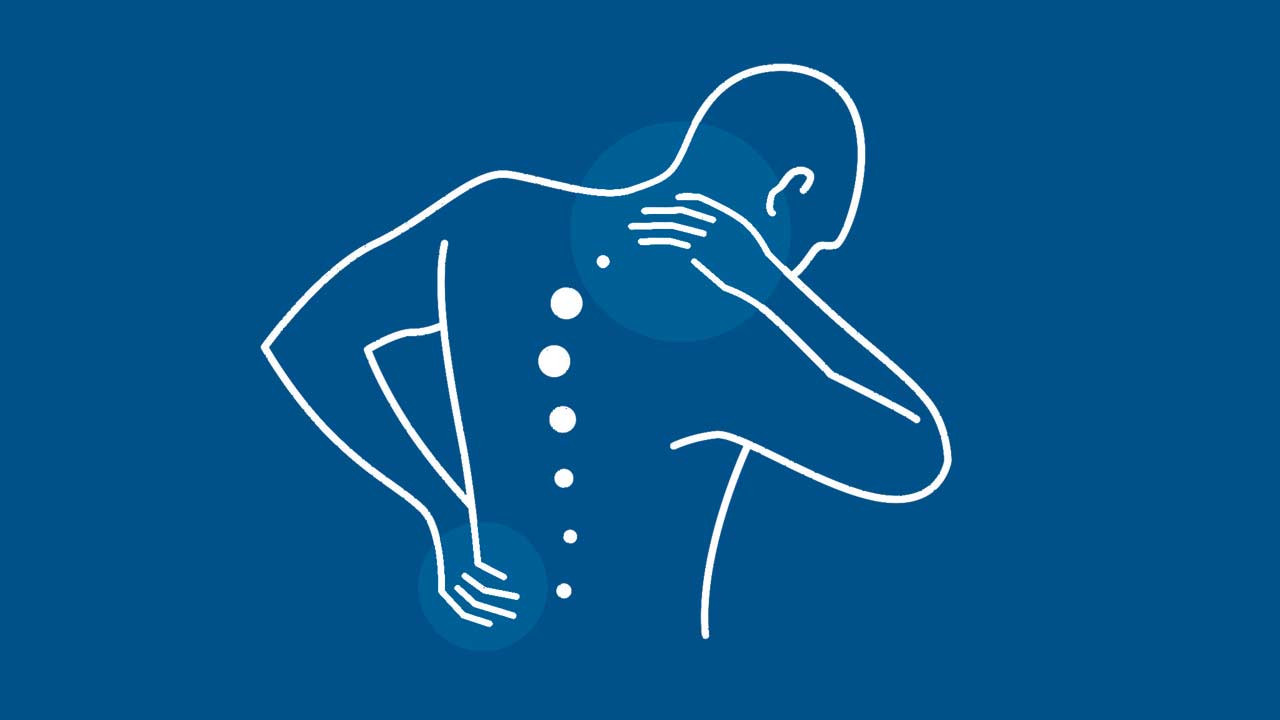
Pain into the shoulder, arm, or hand
If a cervical nerve root is irritated or compressed, pain may radiate from the neck into the shoulder, arm, or fingers. This is called cervical radiculopathy.
Numbness, tingling, or weakness
Nerve irritation can cause pins-and-needles sensations, altered feeling, clumsiness, or weakness in an arm or hand.
Headaches
Some people experience pain that begins in the neck and extends toward the back of the head.
Symptoms of spinal cord compression
More advanced narrowing can affect the spinal cord, a condition called cervical myelopathy. Possible signs include difficulty with balance or walking, hand clumsiness, progressive weakness, or changes in bowel or bladder control.
Seek urgent medical attention for sudden or progressive weakness, loss of coordination, trouble walking, new bowel or bladder changes, severe pain after significant trauma, fever with severe neck stiffness, or symptoms that may suggest a stroke.
Diagnosis
Medical history and physical examination
A clinician will ask about pain patterns, neurological symptoms, prior injuries, work and activity demands, and medical history. The examination may assess strength, sensation, reflexes, balance, coordination, and neck motion.
Imaging studies
- X-rays can show disc-space narrowing, alignment changes, and bone spurs.
- MRI provides detailed views of discs, nerve roots, the spinal cord, and other soft tissues.
- CT scans may provide additional detail about bone changes or may be used when MRI is not appropriate.
Electrodiagnostic testing
Electromyography (EMG) and nerve-conduction studies may help clarify whether symptoms are related to a cervical nerve root or another condition affecting the arm or hand.
Non-Surgical Treatment Options
Many people improve with non-surgical treatment. A care plan should be individualized to the cause and severity of symptoms.
Medications
Depending on the patient’s health history, clinicians may recommend acetaminophen, nonsteroidal anti-inflammatory drugs (NSAIDs), short-term muscle relaxants, or other medicines for pain. Medication choices should be reviewed with a qualified clinician, particularly for people with kidney disease, heart disease, ulcers, bleeding risk, or medication interactions.
Physical therapy
A tailored program may include gentle mobility work, strengthening for the neck, shoulder blade, and upper-back muscles, posture training, and guidance on returning to daily activities. The goal is improved function, not simply avoiding all movement.
Activity and ergonomic modifications
Adjusting computer-screen height, phone habits, lifting techniques, sleep position, and work setup can reduce strain on the neck. Regular breaks from sustained positions are often helpful.
Heat or ice
Short periods of heat or cold may relieve pain during flare-ups. Protect the skin and avoid falling asleep with heating pads or ice packs in place.
Injections
For selected patients with persistent radicular pain, a spine specialist may consider an epidural steroid injection or a targeted nerve-root injection. These procedures may provide temporary symptom relief and are generally part of a broader treatment plan.
Surgical Treatment Options
Surgery may be considered when significant symptoms persist despite appropriate non-surgical treatment, when there is progressive neurological weakness, or when imaging confirms pressure on a nerve root or spinal cord that matches the patient’s symptoms.
Anterior cervical discectomy and fusion (ACDF)
The surgeon removes the problematic disc through the front of the neck, relieves pressure on nerves or the spinal cord, and stabilizes the level with a graft or implant to promote fusion.
Cervical disc replacement
For appropriately selected patients, an artificial disc may be placed after disc removal to preserve motion at that level.
Posterior decompression procedures
Depending on the location and extent of spinal narrowing, procedures such as laminotomy, laminectomy, or foraminotomy may create more room for the spinal cord or nerve roots.
The best surgical option depends on the number of involved levels, alignment of the neck, the source of nerve or spinal cord compression, bone health, prior treatment, and individual goals.
Recovery and Long-Term Management
Recovery varies by diagnosis and treatment. Whether care is non-surgical or surgical, rehabilitation commonly focuses on restoring safe movement, strength, posture, and daily function. Long-term measures may include regular exercise, avoiding tobacco, maintaining a healthy weight, using sound lifting mechanics, and addressing recurrent symptoms early.
A Collaborative Approach to Cervical Spine Care
Comprehensive cervical spine care may involve orthopedic spine surgeons, neurosurgeons, physiatrists, pain-management specialists, neurologists, physical therapists, and rehabilitation professionals. A multidisciplinary approach can help ensure that treatment is based on symptoms, examination findings, imaging, lifestyle needs, and the patient’s goals.
Disclaimer: This article is intended for informational purposes only. It is not a substitute for professional medical advice, diagnosis, or treatment. Always consult a qualified healthcare provider.
Expert Care For This Condition Provided By

Raymond Baule, MD

Daniel Birk, MD

Brian Bogdanski, DC

Ruth Bochat FNP

Richard Bogdanski, DC

Samuel Brown, DO
Mitchell Long, DO

Nitin Mariwalla, MD

Zihan Masood, MD

Jairus Gaberiel Flores, DPT

Marc Lamantia, DC

Alexandros Zouzias, MD

Jeffrey Linder, DC

Dalbeer Pawar, PT